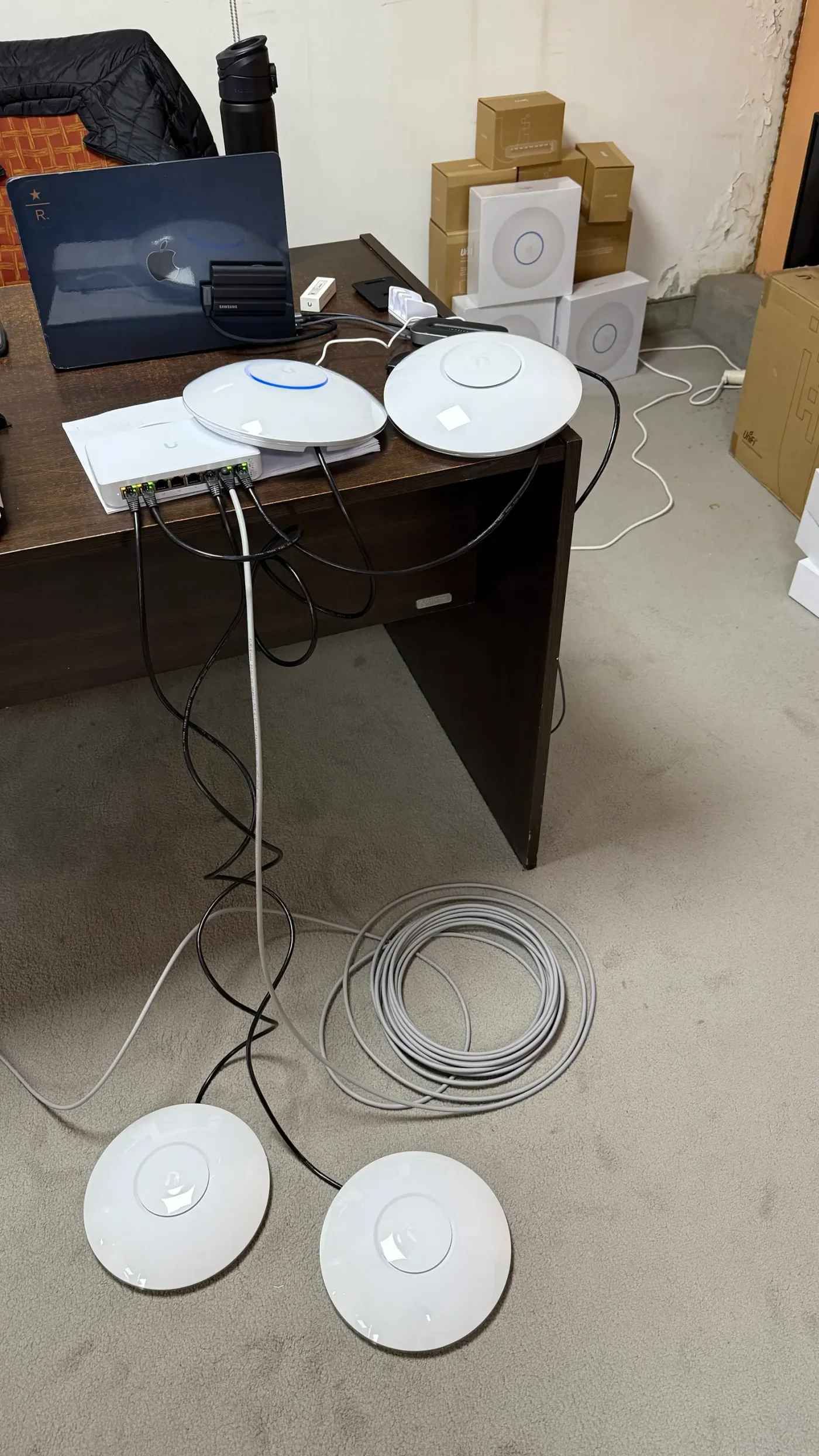
A hotel with 30 standard rooms typically requires between 4 and 6 access points in hallways and rooms, plus 1 or 2 in common areas, according to the practical rule of one for every 6 to 10 rooms. The actual number depends on the site survey, not a table – thick walls or stone walls require additional equipment.
“How many access points do I need?” is the first question a hotel administrator asks before requesting a quote, and the short answer is rarely accurate, because it depends on the building’s layout, not on the provider’s selection list.
The practical rule, before any exact figure.
In the design of wireless networks for the hospitality sector, a common benchmark is one access point for every 6 to 10 rooms, based on standard construction (such as plaster or wooden walls, and rectangular floors), plus one or two additional devices for the lobby, restaurant, and common areas. This serves as a reasonable starting point for budgeting, but it’s not a definitive number to install without reviewing the specific building.
Why does the site survey take precedence over the table?
That rule applies only once the building incorporates stone, reinforced concrete, irregular layouts, or more than one floor with stairs in between – each material attenuates the signal differently. Therefore, we measure before quoting: a technician visits the property with a radio frequency meter, records the actual signal at each point, and creates a coverage map overlaid on the hotel’s floor plan, not based on an office estimate.
Furthermore, today every guest connects their phone, laptop, and sometimes a tablet simultaneously – not just a single device as was the case a decade ago. This added demand per room is another reason why estimating “by eye” ultimately leads to dead zones precisely during peak hours, such as check-in or the evening.
How many access points, according to the size of the hotel?
The following table summarizes land figures from DITAP, measured from property surveys in Magallanes and Patagonia conducted in 2026, for standard construction without difficult materials.
| Hotel size | Access points in rooms and hallways | Common areas |
|---|---|---|
| Between 10 and 15 rooms. | 2 a 3 | 1 |
| Between 20 and 30 rooms. | 4 a 6 | 1 a 2 |
| Between 40 and 60 rooms. | 7 a 10 | 2 a 3 |
These are benchmark figures prior to the site survey. A stone building or one with very irregular floor plans may require 30 to 50 percent more equipment than these ranges suggest.
What changes when we use the actual number?
Three factors are driving the final figure more than any other:
- Building materials. Stone, reinforced concrete, and thick glass are more effective at providing protection than lightweight partitions.
- Plant shape. Long, narrow hallways require a different distribution of equipment than a grid-like arrangement.
- Population density per area. The lobby and the restaurant have more devices (or equipment) per square meter than a hallway with rooms.
What does a well-executed installation include?
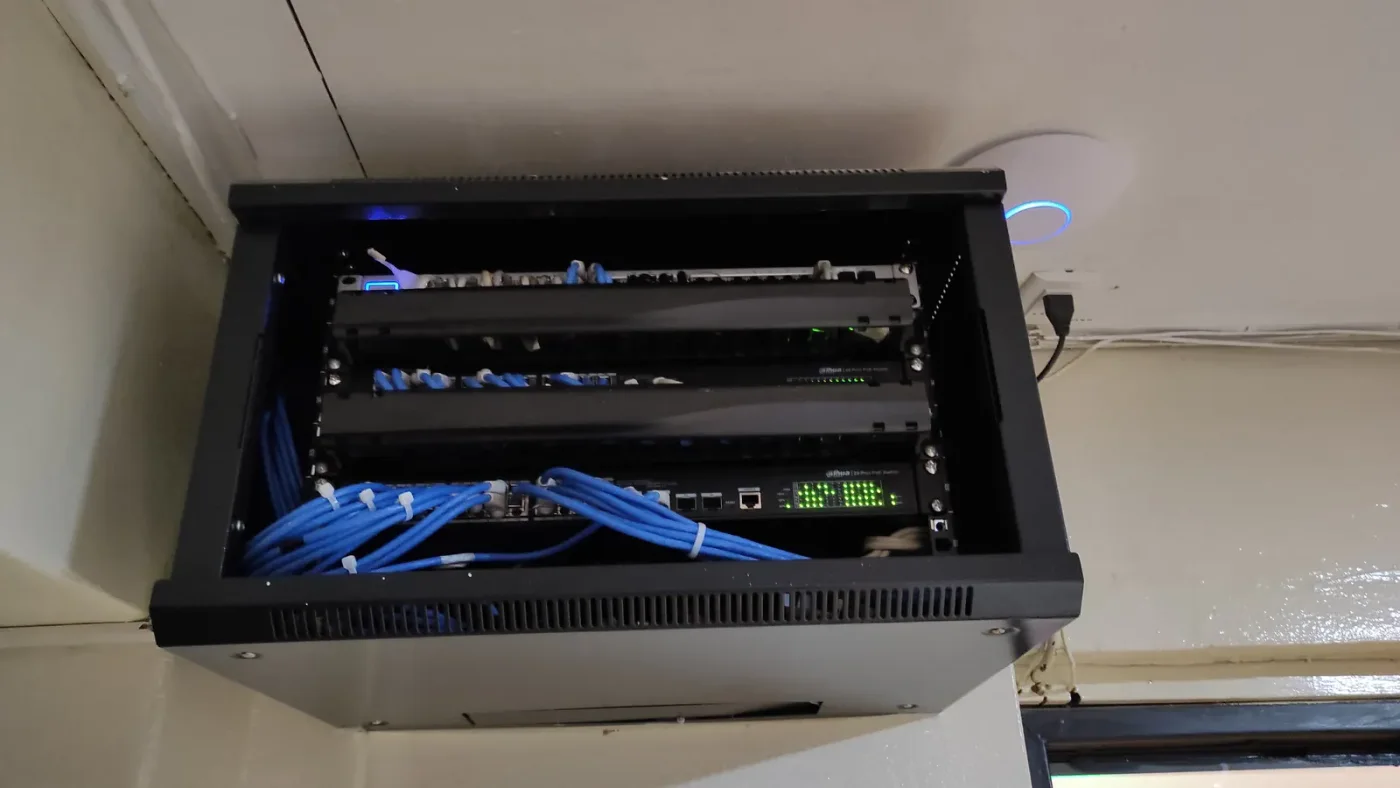
It’s not enough to simply install enough access points; it’s necessary to segment the network by use – guest Wi-Fi, employee Wi-Fi, and a separate network for security cameras – to prevent a compromised device from accessing the hotel’s systems. Furthermore, implementing a branded access portal can improve the hotel’s image and also capture guest contact information for post-stay emails, with the guest’s consent.
How much does it cost to do it well?
At the Ditap Hotel, the… hotel Wi-Fi service Key installation starts at $120,000 per room, with the site survey already factored into the project, and monthly support is quoted based on the property, equipment, and agreed-upon level of service for the season. For a 30-room hotel, this amounts to approximately $3,600,000 in installation costs, a figure that will be adjusted after assessing your building’s actual dimensions.
Signs that your hotel needs to review its WiFi.
It’s not necessary to wait for the next negative review to realize that something is wrong. Three signs usually appear beforehand: the speed noticeably drops after 8 PM, there are rooms or hallways where the Wi-Fi doesn’t reach at all, and the hotel staff end up using their mobile data because the hotel’s network is unreliable, even for work purposes.
Before quoting, please request a site survey.
Any supplier can sell access points in bulk. The key difference lies in determining exactly how many are actually needed before installing the first one, and in maintaining a separate network based on usage from the very beginning. This is precisely what a hotel in Patagonia achieved with its Wi-Fi, which went from a rating of 3.2 to 4.9 stars in guest reviews, using the same method described in this article.
The prices listed are for September 2026. Please check the validity, scope, and applicable taxes before proceeding.
Frequently Asked Questions
Does a home Wi-Fi router work for a hotel?
No, for more than a couple of rooms: it doesn’t support the number of devices connected at the same time, nor does it allow for network segmentation by use – something that a business-level access point does.
Does fiber optic technology replace the process of site surveys?
No. Fiber solves the bandwidth coming into the hotel; the site survey determines how that signal is distributed within the building, room by room.
How much does it cost to install WiFi for a 30-room hotel?
With a benchmark price of $120,000 per key-turn room, a 30-room hotel is estimated at around $3,600,000, although the exact figure depends on a site survey and the condition of the existing wiring.
Can it be done in stages?
Yes. Many hotels first install critical areas, such as the reception and hallways, and then add rooms during the off-season.